Contents
An older Bentley is a particular car with a particular history. The Arnage makes that point especially well: the name on the boot starts the conversation, but it does not finish the specification or explain decades of use. For enthusiasts, the most rewarding approach combines historical interest with careful documentation.
Start by establishing the model year, original market and exact variant. Do not transfer specifications from one Arnage article to every car carrying the name. Engines, equipment and other details can differ across a model's life. A registration date alone may not identify its production specification.
Build a timeline, not a pile of paperwork
Arrange the records chronologically. Note dates, distance readings, workshop names and work performed. A clear timeline helps reveal where the story is well documented and where there are gaps. Keep miles and kilometres explicitly labelled, particularly if a vehicle has moved between countries.
Read invoice descriptions carefully. A recommendation to replace a part is not evidence that it was replaced. A subsequent invoice may close the issue, or it may not. Where the paperwork is unclear, ask the workshop or owner for clarification rather than filling the gap with an assumption.
Separate age, wear and faults
Patina can be part of a classic car's appeal, but the word should not blur the difference between a cosmetic mark and a functional problem. A worn seat surface and an unresolved warning light belong in different parts of an assessment. Record what is observed and what needs professional investigation.
A specialist familiar with the relevant variant can advise on inspection priorities and parts availability. Ask for an explanation you can understand and a written report. It is more useful to know which findings need immediate attention than to receive a long list with no indication of urgency or uncertainty.
Think about the support around the car
Before imagining a touring holiday, consider where routine servicing and unexpected repairs would be handled. Find out whether your local workshop supports that specific model and how it approaches obtaining parts. A car may be delightful on an occasional outing but inconvenient if specialist support is far away.
Storage and use also need a plan. Discuss the correct battery care and storage procedure with the handbook and a qualified specialist. Avoid generic advice that tells every classic owner to disconnect a battery or start an engine briefly at fixed intervals; vehicle systems and circumstances differ.
Describe the car honestly
When sharing an Arnage with other enthusiasts, identify what you know, what comes from documentation and what remains uncertain. A colour name supported by a build sheet is different from a colour guessed from a photograph. A claimed restoration should have a scope, a date and records, not just a polished exterior.
One name does not identify one engine
Bentley's historical overview dates the Arnage's introduction to 1998 with a 4.4-litre turbocharged V8, followed by 6.75-litre versions. It also records the long-wheelbase RL. A general “Arnage specification” can therefore be wrong for the vehicle you are studying even when the source itself is accurate.
An enthusiast's identification card should record the variant wording, engine information from documentation, model year and source of each fact. Leave a blank where evidence is missing. Do not fill it by matching wheels or a badge to an internet photograph; visible parts can change over a car's life.
Turn an ambiguous invoice into a useful question
Imagine a folder with a March inspection recommending attention to a cooling-system seep, followed by an April invoice saying “cooling-system work.” That fictional sequence does not prove the recommended repair was completed. The useful question is: which component was repaired or replaced, and does the later document refer to the earlier finding?
Keep the March item open until the scope is clarified. Record the clarification beside the invoice, preserving the original. This small discipline protects the car's history from well-meaning assumptions and gives a model specialist a better starting point for future work.
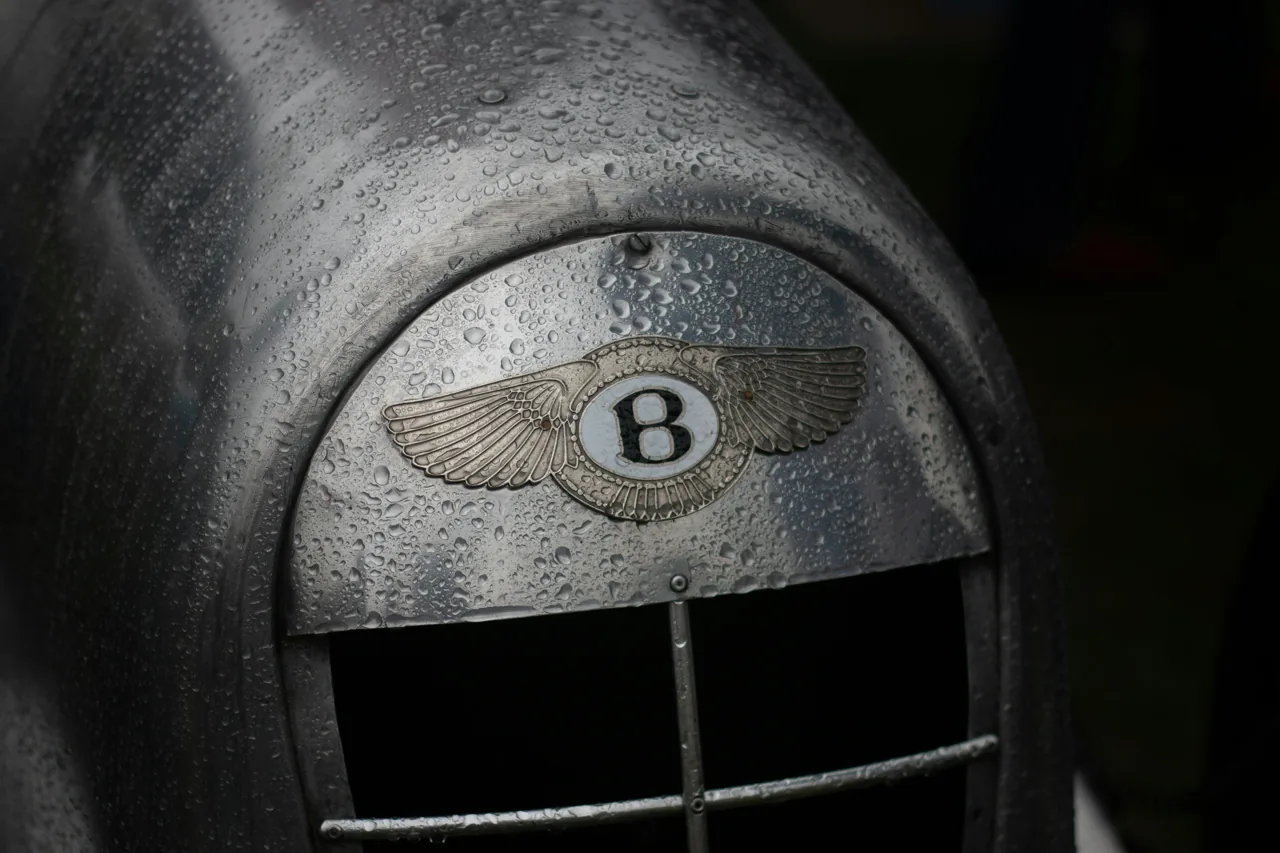
This approach makes classic motoring more interesting as well as more transparent. You begin to see the car as a sequence of choices and custodianship. The badge provides the connection to Bentley's wider history; the records explain the individual vehicle in front of you.
Sources & reading notes
Independent researched guidance. Examples are editorial illustrations, not vehicle quotations or firsthand road tests. Our editorial standards.