Contents
An interior can be impressive at first glance and more interesting on a second look. Leather, wood and metal are only the beginning. The way materials meet, how a control is shaped and whether a seat remains comfortable are what turn a collection of finishes into a cabin people can use.
When exploring Bentley interiors, distinguish the design from the condition of an individual vehicle. A manufacturer describes an intended finish. A used car may have wear, replacement parts or later repairs. Neither a glossy photograph nor the word handcrafted tells the whole story.
Look at the junctions
Examine where one surface meets another: a trim edge beside a vent, stitching around a curved panel or the transition from a seat cushion to its bolster. Look for consistency in alignment and finish. Natural materials can vary, so a difference is a reason to investigate, not an automatic verdict of damage.
Use ordinary daylight as well as showroom lighting. Strong spotlights can make polished surfaces dramatic while obscuring small marks. Ask for photographs from more than one angle if viewing remotely. Avoid making a condition judgement from an image that has heavy colour grading or smoothing.
Make touch and use part of the assessment
While stationary and with permission, operate the controls you use most. Can you identify them without searching? Do their actions feel consistent? Can you adjust temperature and seat position without losing your place in a menu? A visually elaborate cabin still has to accommodate simple tasks.
Seat comfort is personal. Try the available adjustments patiently and assess support rather than softness alone. If a feature is unfamiliar, ask for a demonstration instead of assuming it is broken or standard on every car. Record the exact fitted equipment when comparing examples.
Materials need specific care
Do not assume a product labelled “leather cleaner” suits every coated, perforated or repaired surface. Consult the handbook and obtain advice for the finish in your car. The same caution applies to gloss veneer, open-pore surfaces, screens and decorative metal. A product that makes one material shine may leave another slippery, streaked or damaged.
Avoid treating shine as proof of condition. Some surfaces are intended to have a restrained finish, and build-up can alter their appearance. If you are unsure whether an area is dirty, worn or previously repaired, seek advice before escalating to stronger products.
A five-minute observation exercise
- Choose one seat, one trim junction and one frequently used control.
- Describe their materials and function without using luxury adjectives.
- Note any uncertainty about originality or condition.
- Compare your observations in daylight and under artificial light.
- Look up the relevant specification before assigning a feature to an entire model range.
Open-pore wood is not unfinished wood
Bentley's 2018 Mulliner veneer announcement describes an open-pore walnut treatment using three thin lacquer layers totalling 0.1 mm. The useful distinction is between a finish that lets the grain remain perceptible and one that creates a more glass-like appearance. “Open-pore” does not mean the surface has no protective finish.
This is a documented example, not a specification for every Bentley veneer. Use the description for the actual material before deciding how it should look or be cared for. A photograph with a broad white reflection may reveal lighting more clearly than texture.
A five-minute cabin study
Choose one view and follow five boundaries: wood to leather, leather to stitching, stitching around a corner, a switch within its surround and a vent within the dashboard. At each boundary, note alignment, spacing and how the pieces meet. These observations remain useful even if you do not know the material's marketing name.
Then separate three judgements. Design concerns the intended arrangement. Execution concerns how that arrangement is made. Condition concerns what has happened through use. A worn seat can belong to a thoughtfully designed cabin, and a glossy restoration can obscure evidence of the original surface. Keeping these judgements separate makes your description both fairer and more interesting.
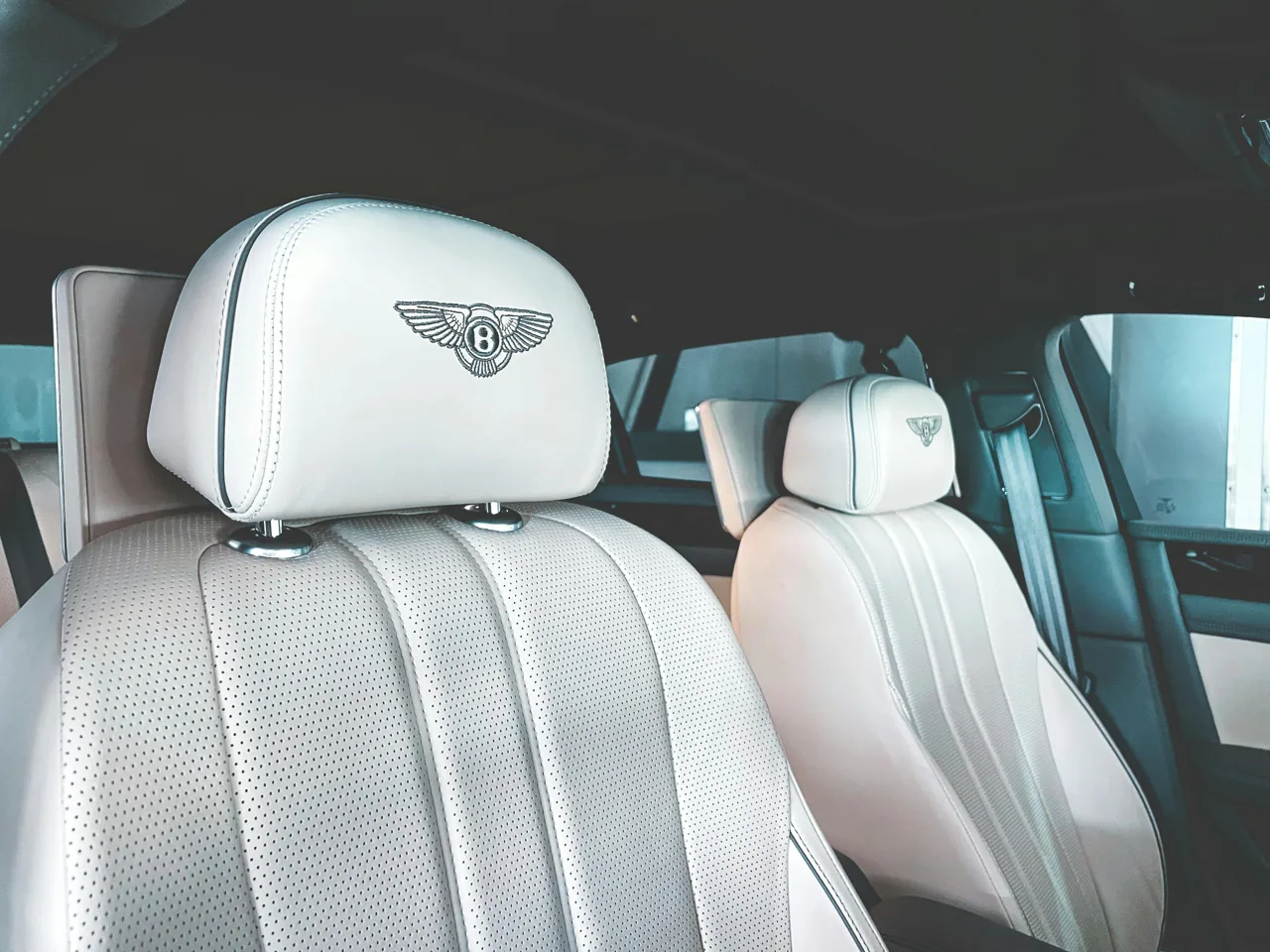
For colour, compare neighbouring areas in the same light before assuming they match. A cream seat under a warm lamp and the same seat in daylight can appear very different. Do not use a heavily edited image as evidence of an exact factory colour.
This approach works just as well for an enthusiast at a display as for an owner. You start noticing design choices that a badge or a price cannot explain. The appeal of craftsmanship becomes something you can describe precisely, rather than something the reader is simply asked to accept.
Sources & reading notes
- Bentley Motors: Mulliner
- Bentley Motors: ownership resources
- Bentley: open-pore walnut veneer by Mulliner, 2018
Independent researched guidance. Examples are editorial illustrations, not vehicle quotations or firsthand road tests. Our editorial standards.