Contents
Personalisation is most satisfying when the choices belong together. An unusual paint colour, embroidered detail or contrasting trim can each be attractive, yet combining every interesting option can make a cabin visually restless. Bentley's Mulliner offering provides a way to explore individual choices; the reader's task is to understand the brief behind them.
Bentley describes Mulliner as its personal commissioning and coachbuilding world. The available programmes and choices depend on the model and project. A regular production car with selected finishes should not automatically be described as a unique coachbuilt vehicle. Use the actual documentation and terminology for the example you are discussing.
Start with an atmosphere
Write a short description of how you want the car to feel: calm, formal, warm, understated or visually energetic. Choose two or three words rather than a long list. Then identify which element will lead the design. It might be the exterior colour or a particular interior material.
Use that lead element to assess the rest. If the exterior is vivid, a quieter cabin may provide balance. If the cabin has a strong contrast, simpler stitching may give the eye somewhere to rest. These are design suggestions, not rules or claims about resale value.
Compare samples in context
A small swatch and a large curved panel do not always create the same impression. Where possible, look at physical samples and comparable completed interiors. Review them in daylight and artificial light. Digital configurators are useful for exploring combinations, but screen settings and photography can change apparent colours.
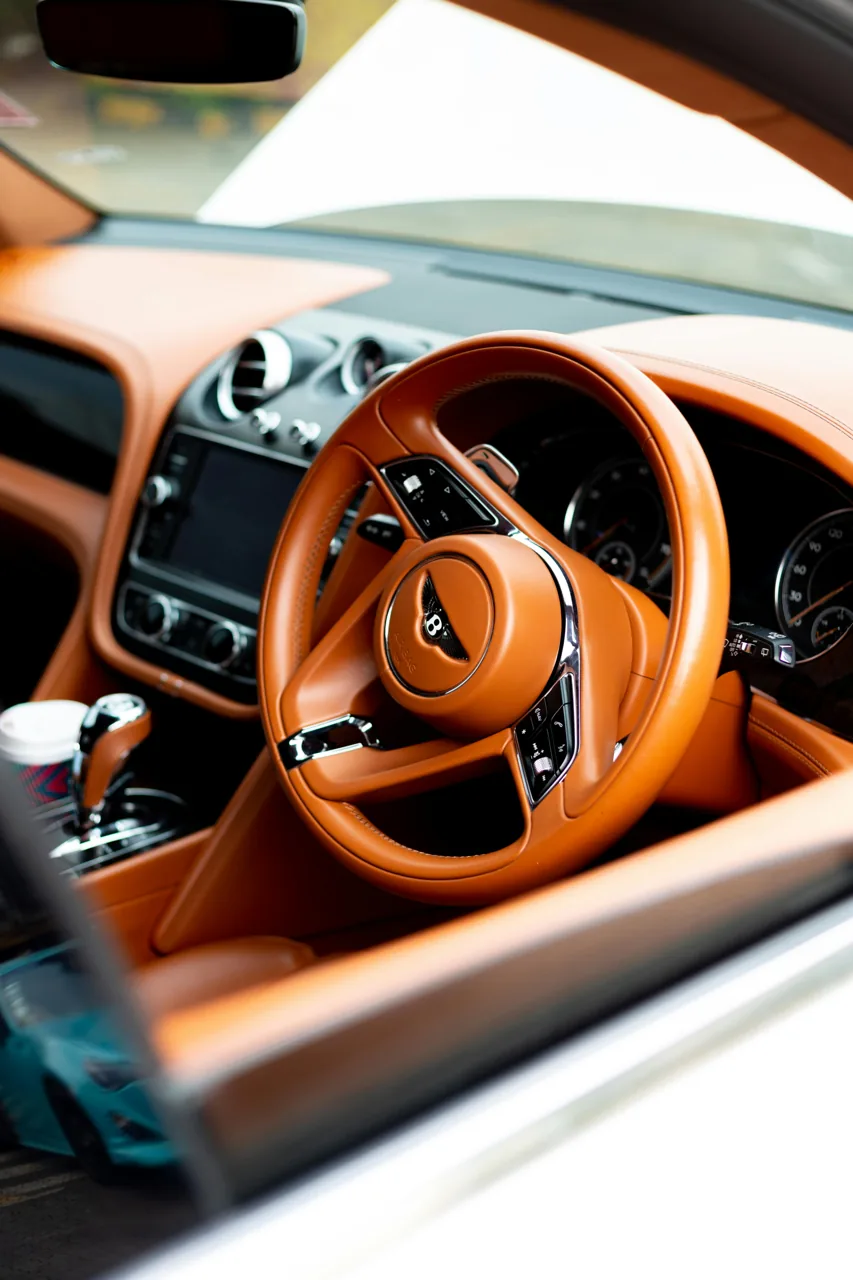
Think about the parts you see together. Seat trim, door panels and dashboard finishes form a single view from the driver's seat. A choice that looks attractive in isolation may compete with another texture. Consider reflective surfaces too, particularly near glazing or screens.
Separate visual choices from functional needs
Comfort, access and everyday controls deserve their own checklist. Do not let a memorable colour scheme distract from the seating or equipment that makes the car usable. A personal design should support how the vehicle will be enjoyed, whether that means regular touring or occasional outings.
Ask how each selected material should be cared for and what happens if a section requires repair. Keep finish names and codes with the vehicle's records. Those details may be more useful years later than a collection of promotional photographs.
Tell the story accurately
When describing a personalised Bentley, distinguish factory work, commissioned work and later modifications. A specification sheet, invoice or commissioning document gives a claim substance. If the provenance is unknown, say so. Do not imply that any unusual detail is necessarily one of a kind.
Write a design brief in three sentences
An original exercise is to describe the mood, the dominant material and the detail you want someone to notice last. For example: “A quiet cabin for long daytime journeys. Warm wood is the main feature. A restrained contrast stitch becomes apparent only on closer inspection.” This fictional brief is a way to organise choices, not a factory specification or a claim about an available commission.
Now test every proposed detail against those sentences. A bright contrast panel may compete with the wood. Several strong motifs may each look attractive on a sample but become restless together. The useful question is not how many elements can be personalised, but which ones reinforce the same idea.
| Design layer | Decision | A useful check |
|---|---|---|
| Foundation | Main paint and upholstery colours | Do they still relate in ordinary daylight? |
| Material | Veneer or other trim treatment | Is the surface the focus or a background? |
| Accent | Stitching, piping or small contrasting detail | Does repetition create coherence or clutter? |
| Personal mark | A documented individual detail | Can its meaning be explained without inventing provenance? |
Save dated samples and the written description of any completed work. If you later write about the car, distinguish a Mulliner derivative, a documented personalisation and a fully bespoke commission using the evidence available. A name on a specification sheet should not be expanded into a more exclusive story than the records support.
There is no universal list of options that are “worth it.” Enjoyment depends on taste and use; future value is uncertain. A better question is whether a choice strengthens the design, makes the car more pleasant to live with or carries a personal meaning you will still appreciate after the initial novelty has passed.
Sources & reading notes
Independent researched guidance. Examples are editorial illustrations, not vehicle quotations or firsthand road tests. Our editorial standards.